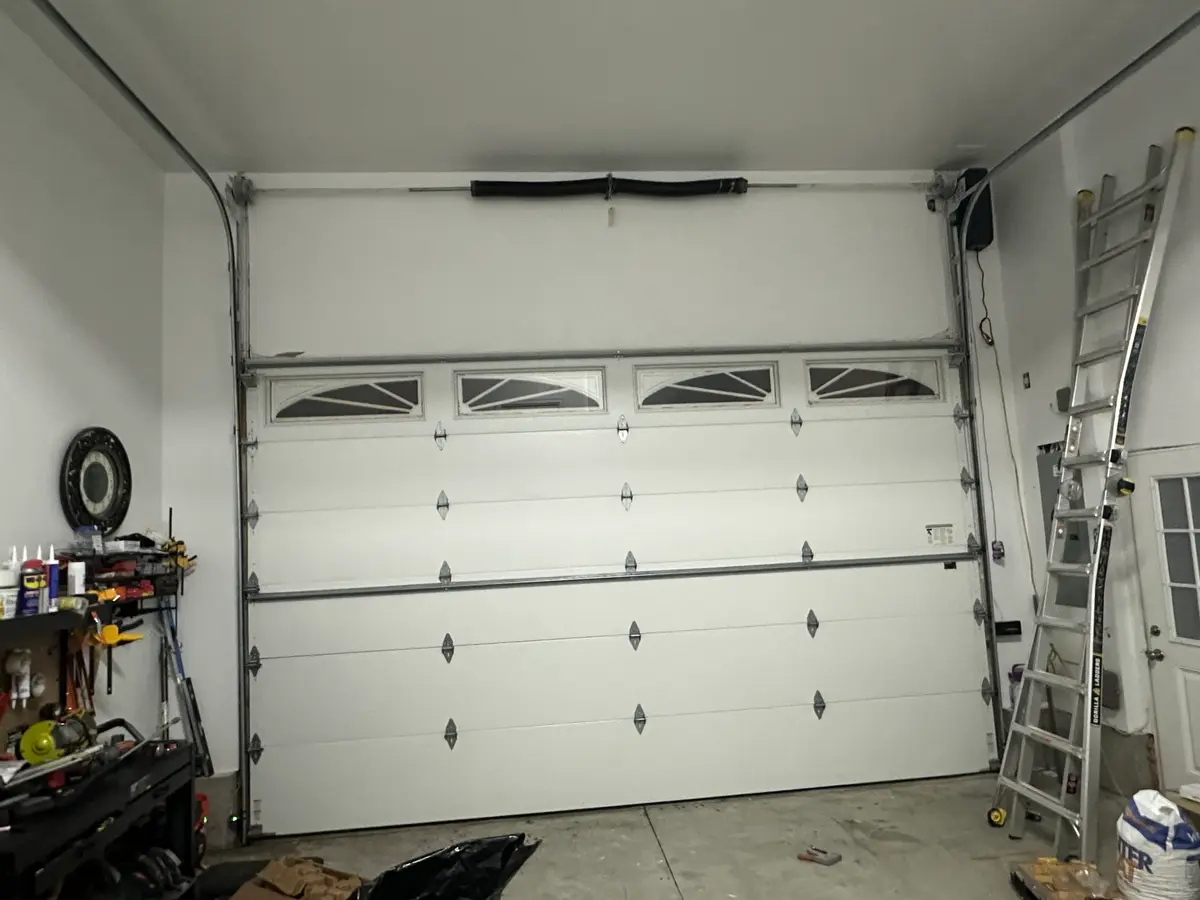
A standard residential garage door spring lasts 7 to 14 years, or about 10,000 open-and-close cycles. The actual lifespan depends almost entirely on how often the door is used. Springs are rated in cycles, not years.
How to estimate the cycles on your door: count how many times the door opens and closes on a typical day. Most homes average 4-6 cycles per day (driving in and out, kids leaving, etc.). At 4 cycles/day, a 10,000-cycle spring lasts ~7 years. At 6 cycles/day, ~4.5 years. At 2 cycles/day (single-driver, weekend-only), 13+ years.
Standard vs high-cycle springs: Most builder-installed springs are 10,000-cycle. Upgraded high-cycle springs (25,000-cycle) cost an extra $30-$60 per spring but last 2.5x as long. We default to high-cycle on every replacement we install. The math always works in the homeowner's favor.
What shortens spring life: Cold New England winters (springs are stiffer when cold and absorb more impact during the first cycle of the day), hard cycles from auto-reverse on misaligned sensors, weight added to the door (insulation upgrades, decorative overlays) without re-tensioning the springs, and lack of lubrication. Annual maintenance with a silicone-based lubricant on the spring coils extends life by 20-30%.
Replace before failure, not after: springs almost always break when the door is closed (when they're under maximum tension). A door with a broken spring can't be opened by hand. It's too heavy. If you're past 10 years on the original spring, planned replacement is dramatically less expensive than emergency replacement plus the inconvenience of a stuck door.
The pair principle: if your door has two springs, they almost always fail within months of each other (same cycles, same age). If one breaks, replace both. Same labor cost, half the future emergencies.
Watch for these warning signs before failure, and request same-day replacement when you spot them.